Every contractor has been there. Three bids are due this week, a client sends revised plans at the last minute and you’re trying to finish takeoffs after a full day on the job site.
When deadlines tighten, accuracy often becomes the first casualty. A missed room, incorrect measurement or overlooked material quantity can quickly turn a profitable project into a costly mistake. The challenge is that contractors can’t simply slow down. In a competitive market, speed matters.
The good news is that fast estimates don’t have to come at the expense of accuracy. With the right processes, tools and habits, contractors can submit bids quickly while protecting their margins and reputation.
Why tight deadlines create estimating risks
Construction estimating requires focus and attention to detail. When time is limited, even experienced estimators can overlook critical information.
Several factors increase the risk of mistakes during busy bidding periods:
- Multiple bids: Juggling several deadlines at once can make it difficult to give each estimate the attention it deserves.
- Plan revisions: Last-minute drawing updates can create confusion and lead to missed changes.
- Limited resources: Small teams often have to balance estimating responsibilities with other operational tasks.
- Manual work: Repetitive calculations increase the chances of human error.
- Estimator fatigue: Long days can impact concentration and decision-making.
These challenges often lead to costly mistakes that don’t become obvious until a project is underway.
Some of the most common estimating issues include:
- Missed quantities
- Incorrect pricing
- Underestimated labor
- Scope gaps
- Margin erosion
Pressure is unavoidable in construction. The key is creating systems that help maintain consistency even when deadlines become demanding. That’s where process becomes just as important as experience.
5 practical ways to stay accurate under pressure
Accurate estimating under tight deadlines doesn’t happen by accident. It requires a repeatable approach that reduces opportunities for mistakes.
The following five strategies can help contractors maintain accuracy while keeping bids moving:
1. Standardize your estimating process
One of the fastest ways to improve accuracy is to follow the same workflow every time.
When estimators create their own process for each project, it’s easier to overlook important steps. Standardization creates consistency and helps ensure nothing gets missed.
Start by identifying the key steps that should be completed on every estimate. A simple checklist creates consistency and helps ensure important tasks don’t get overlooked when deadlines are tight:
- Review all plan sheets
- Confirm project scope
- Complete quantity takeoffs
- Verify labor requirements
- Review material pricing
- Conduct a final review
Checklists may seem basic, but they help eliminate preventable errors. They also make it easier to train team members and maintain quality across multiple estimates.
Once your process is documented, every project becomes easier to manage. That consistency creates a stronger foundation for handling busy bidding periods.
2. Break projects into smaller sections
Large projects can feel overwhelming when deadlines are approaching.
Instead of trying to estimate everything at once, divide the project into manageable scopes. Focusing on one area at a time makes it easier to stay organized and catch potential issues.
A phased approach might look like this:
| Scope | Focus |
| Site work | Excavation, grading and utilities |
| Concrete | Slabs, footings and foundations |
| Framing | Structural materials |
| Roofing | Measurements and waste factors |
| Interior finishes | Drywall, flooring and trim |
Breaking estimates into sections reduces mental overload and creates natural checkpoints throughout the process.
It also makes reviews significantly easier because each scope can be verified independently. That structure helps maintain accuracy even when several bids are competing for your attention.
3. Build and maintain historical data
Past projects can be one of the most valuable estimating resources available.
Historical data gives estimators a benchmark for evaluating current bids. If a number looks dramatically different from similar projects, it creates an opportunity to investigate before submitting the estimate.
Useful historical information includes:
- Material quantities
- Labor hours
- Production rates
- Subcontractor costs
- Final project costs
Maintaining historical data allows contractors to estimate faster because they aren’t starting from scratch every time.
It also creates a valuable reality check. When something looks unusual, previous project data can help identify issues before they impact profitability.
For contractors building a stronger estimating process, understanding the fundamentals of a takeoff is equally important. Read our guide on “What is a construction takeoff?” to learn how accurate quantity measurements support better estimates.
4. Prioritize a final review
When deadlines are tight, skipping the review stage is tempting.
Unfortunately, that’s often where costly mistakes slip through.
Even a short review can uncover errors that would otherwise make it into the final bid. The goal isn’t to spend hours reviewing every line item. It’s to focus attention where it matters most.
Before submitting an estimate, verify:
- Measurements and quantities
- Material pricing
- Scope inclusions and exclusions
- High-cost line items
Large material packages and labor-intensive scopes deserve extra scrutiny because they have the greatest impact on profitability.
A 15-minute review can prevent mistakes that cost thousands. That’s time well spent regardless of how busy the schedule becomes.
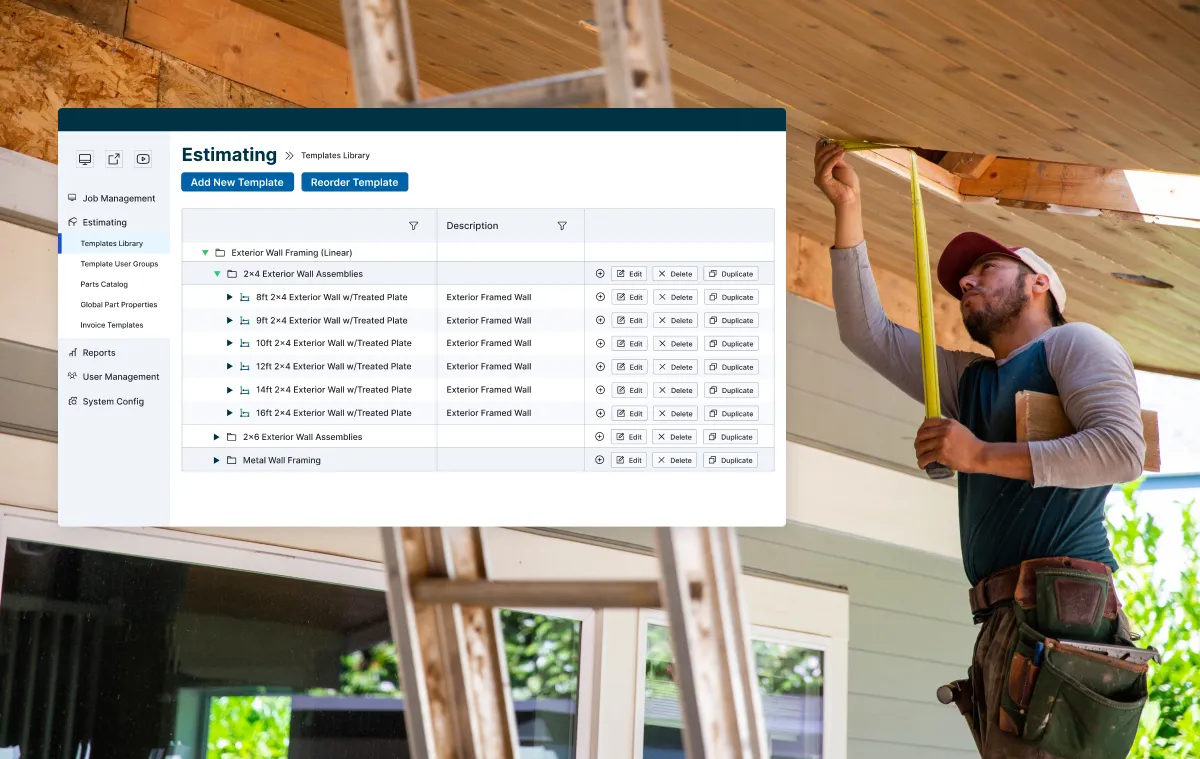
5. Use digital takeoff tools
Digital takeoff tools simplify several parts of the estimating process. Contractors can measure directly from digital plans instead of manually scaling drawings, while automatic calculations reduce repetitive math and quantity transfers. They also create greater consistency by applying the same measurement process across every estimate. When plan revisions arrive, quantities can be updated more efficiently, helping teams complete takeoffs faster while maintaining confidence in the numbers.
Technology doesn’t replace estimating expertise. It helps estimators spend more time evaluating projects and less time performing repetitive calculations.
If you’re new to digital workflows, our “Quantity takeoff 101 guide” provides a helpful overview of how takeoffs support more accurate estimates. As bid volume increases, that efficiency becomes a significant competitive advantage.
How technology helps contractors bid faster
Construction estimating software has evolved far beyond simple spreadsheets.
Modern takeoff platforms remove many of the repetitive tasks that slow estimators down. Instead of manually measuring plans, transferring quantities and checking calculations multiple times, contractors can focus on evaluating project costs and making informed decisions.
The result is a faster workflow that doesn’t require sacrificing accuracy to meet a deadline.
Those advantages show up throughout the bidding process:
- Faster measurements from digital plans
- Fewer manual calculations
- Less rework when plans change
- More consistency between estimates
- Greater capacity to handle additional bid opportunities
For many contractors, technology isn’t just about saving time. It’s about creating a process that remains reliable even when workloads increase.
That’s one reason many small contractors are moving away from spreadsheets and toward dedicated estimating tools.
Where Square Takeoff fits in
When deadlines are tight, every minute matters.
Square Takeoff helps contractors complete digital takeoffs faster while improving consistency. Users can upload plans, perform measurements directly from digital drawings and calculate quantities without relying on manual scaling or repetitive calculations.
Whether you’re estimating a small remodel or managing multiple bid opportunities at once, having faster access to accurate quantities can make it easier to stay competitive without increasing workload.
For contractors juggling multiple deadlines, the ability to work faster without sacrificing precision can have a direct impact on profitability.
Many contractors don’t realize how much time manual workflows are costing them. If you’re still relying on traditional methods, explore the hidden costs of manual takeoffs and how digital tools can help eliminate common estimating bottlenecks.
How can contractors bid faster while maintaining estimating accuracy?
Tight deadlines aren’t going away. Contractors will always face pressure to produce estimates quickly and respond to opportunities faster than the competition.
The difference between profitable growth and costly mistakes often comes down to process. Standardized workflows, historical data, careful reviews and digital takeoff tools all help create a more reliable estimating system.
When speed and accuracy work together, contractors can submit more bids, protect margins and take on new opportunities with confidence.
Ready to estimate faster without sacrificing accuracy? Start your free trial of Square Takeoff today and see how digital takeoffs can help you bid with confidence.